
Product
FRIENDLY/link Nantong zhuolida Ali SAMSAN Corrosion machining Nantong zhuolida HJD Shenzhen zhuolida Esprit print
HOTLINE
189-3869-3452 0513-8160 1666

189-3869-3452 0513-8160 1666

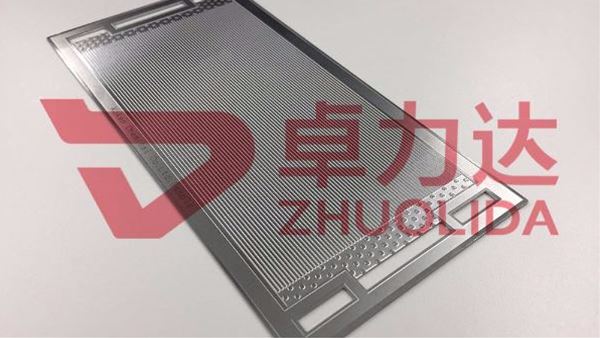
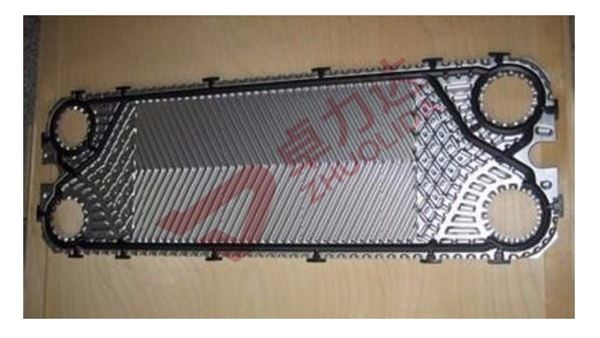
A heatexchanger cold plate is a high-efficiency liquid cooling component designed for precision thermal management in high-power electronic and industrial systems. Unlike traditional air-cooled heat sinks that rely on natural or forced convection, a standard heat exchanger cold plate utilizes internal microchannel fluid circulation to absorb and dissipate concentrated heat rapidly. With the continuous upgrading of high-power chips, power electronics, and new energy equipment, traditional cooling solutions can no longer handle ultra-high heat flux density. In this case, the electroformed heatexchanger cold plate has become an ideal alternative due to its ultra-thin structure, uniform channel distribution, and extremely low thermal resistance. As a professional manufacturer of precision thermal components, Zhuolida provides customized electroformed cooling plate solutions to solve heat concentration, uneven heat dissipation, and structural deformation problems for global industrial customers.
Traditional cold plates are mostly manufactured by stamping, CNC machining, or welding processes. These processing methods have obvious limitations in microchannel precision, structural flatness, and overall consistency. Welded cold plates are prone to thermal deformation and liquid leakage, while mechanically processed cold plates have rough channel inner walls and uneven flow resistance, resulting in unstable heat exchange efficiency. In contrast, the electroformed heat exchanger cold plate developed and produced by Zhuolida adopts advanced pulse electroforming technology, which realizes integral forming without welding seams. This innovative manufacturing method effectively reduces thermal resistance, improves cooling uniformity, and greatly enhances the durability and stability of industrial cooling systems.
The reason why the electroformed heatexchangercold plate is widely recognized in high-end industrial cooling fields lies in its unique structural and performance advantages that traditional processes cannot match. First of all, it features zero internal stress forming. Different from mechanical processing that will produce extrusion and tensile stress, Zhuolida electroformed cooling plate is formed by uniform metal ion deposition, ensuring ultra-high flatness without warping or deformation even in ultra-thin large-size structures. This feature guarantees tight and stable fitting with heat sources, eliminating air gaps that affect heat conduction.
Secondly, microchannel precision reaches the micron level. The internal cooling channel of the standard heat exchangercold plate can be customized with ultra-fine and high-density microchannels. The channel wall is smooth and vertical without burrs or dead corners, which makes the coolant flow more stable and greatly improves the heat exchange coefficient. Compared with traditional cold plates, the cooling efficiency is increased by 30% to 50%, which can stably cope with the continuous heat dissipation demand of kilowatt-level high-power equipment.
In addition, the integrated seamless structure effectively avoids liquid leakage risks. Traditional spliced and welded cold plates are easy to crack and leak under long-term high-temperature and high-pressure working conditions, which brings potential safety hazards to precision equipment. Zhuolida one-piece electroformed heatexchangercold plate has no welding seams and structural gaps, with excellent pressure resistance and corrosion resistance, adapting to long-cycle continuous operation in harsh industrial environments.

Many industrial buyers confuse ordinary machined cold plates with high-precision electroformed cooling plate, but there are essential differences in process logic and practical performance. Traditional cold plate processing belongs to material cutting and splicing molding, which inevitably produces dimensional errors, rough inner walls, and structural stress. Its heat dissipation uniformity is poor, and it is easy to age and deform after long-term use.
Zhuolida’s electroformed heat exchanger cold plate adopts bottom-up electro-deposition molding, which can perfectly reproduce customized microchannel structures. The thickness, channel spacing, and groove depth of the cold plate can be accurately controlled according to customer working conditions. The overall consistency of mass-produced products is extremely high, completely solving the common problems of inconsistent cooling effect and short service life of traditional cold plates in batch applications.
High-precision heat exchanger cold plate is widely used in high-end thermal management scenarios that require high efficiency, stability, and compact structure. In the field of data centers and high-performance computing, it is used for liquid cooling of high-power GPUs and server chips, effectively reducing equipment operating temperature and improving computing stability. In the new energy industry, it serves for battery pack temperature control and inverter heat dissipation, avoiding equipment failure caused by local overheating.
In power electronics and aerospace precision equipment, the electroformed heat exchanger cold plate relies on its ultra-thin, high-precision, and anti-deformation characteristics to meet the strict requirements of equipment miniaturization and high reliability. At the same time, it is also widely used in laser equipment, medical imaging instruments, and industrial frequency conversion equipment, providing stable and efficient heat exchange guarantees for various high-precision mechanical systems.
As a professional factory focusing on precision electroforming technology for 26 years, Zhuolida has mature production bases and complete quality control systems. All electroformed cooling plate products are produced in dust-free workshops with imported precision equipment, achieving micron-level dimensional tolerance control. Each batch of products undergoes strict flatness, pressure resistance, and heat exchange efficiency testing to ensure stable quality.
We support full non-standard customization of size, channel structure, and material. Whether it is ultra-thin microchannel cold plates for precision instruments or high-flow heat exchanger cold plates for industrial equipment, Zhuolida can provide one-stop customized solutions. Adhering to high-precision technology and strict quality standards, we help global industrial customers optimize thermal management systems, improve equipment operating efficiency, and reduce maintenance costs.



 189-3869-3452 0513-8160 1666
 E-MAIL:yw5@zldsmt.com
 QQ:$qq
 No. 268, Jinchuan Road, Nantong high tech Industrial Development Zone, Tongzhou District, Nantong City, Jiangsu Province
All Rights Reserved © 2019-2030Nantong Zhuolida metal Technology Co., Ltd.
ICP:【苏ICP备17060045号-3】


 TEL
TEL Products
 News
News About us