
Product
FRIENDLY/link Nantong zhuolida Ali SAMSAN Corrosion machining Nantong zhuolida HJD Shenzhen zhuolida Esprit print
HOTLINE
189-3869-3452 0513-8160 1666


189-3869-3452 0513-8160 1666

microchannel plate (MCP) is a high-precision micro-structural component with dense and orderly micron-scale channel arrays, widely used in photoelectric detection, precision heat dissipation, microfluidic control and scientific precision equipment. Different from ordinary perforated plates and traditional heat dissipation parts, industrial microchannel plates feature uniform ultra-fine channels, high aspect ratio, large specific surface area and stable structural consistency. Manufactured by mature photochemical etching and precision micromachining technology, high-end microchannel plates deliver smooth burr-free channel walls, accurate dimensional tolerance and excellent flatness. Serving as a core functional part for electron multiplication, efficient heat exchange and micro-fluid transmission, these precision plates support high-end industries such as aerospace, medical imaging, semiconductors and new energy across the globe. This article comprehensively introduces the definition, working principles, material classification, manufacturing advantages and industrial applications of microchannel plates.
A microchannel plate is a thin flat plate equipped with densely distributed micron-level tubular channel arrays, developed for precise signal amplification and efficient heat transfer. Each independent microchannel acts as a tiny functional unit that achieves high-sensitivity electron multiplication, fast fluid circulation and efficient heat conduction beyond the performance limits of ordinary structural plates. Standard industrial microchannel plates adopt standardized channel design with accurate diameter and uniform spacing, ensuring stable and repeatable working performance during long-term continuous operation.
According to practical functions, microchannel plates are divided into two main types: photoelectric detection microchannel plates and thermal cooling microchannel plates. Photoelectric MCPs are mainly used for photon and particle signal amplification in precision detection instruments. Cooling type MCPs focus on high-flux heat dissipation for high-power electronic devices. Both types rely on precise micro-channel structures to break through the technical bottlenecks of traditional components, becoming essential core parts for modern high-end precision equipment.
microchannel plate realize unique functional advantages through professional micro-channel array structures, with different working mechanisms for different application fields. In photoelectric detection systems, the microchannel plate serves as a high-sensitivity electron multiplier. When weak photons or charged particles enter the microchannels, continuous secondary electron collision amplification occurs inside the channels, converting ultra-weak optical signals into strong and detectable electrical signals to support high-precision imaging and accurate signal collection.
In industrial heat dissipation and microfluidic control fields, the dense microchannel structure greatly expands the heat exchange area. Cooling fluid flows evenly through each channel to quickly take away concentrated heat generated by high-power equipment, effectively eliminating local hot spots and achieving uniform and efficient heat dissipation. The standardized channel layout stabilizes fluid flow speed and heat transfer efficiency, significantly improving the operational stability and overall service life of precision industrial equipment.
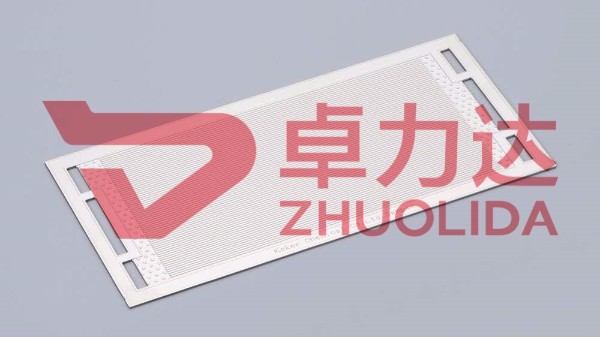
Industrial microchannel plates adopt diversified high-performance materials to adapt to complex and diverse working environments. Glass microchannel plates are widely applied in photoelectric detection and scientific research scenarios, featuring excellent insulation, stable optical performance and high signal accuracy. They are ideal for night vision instruments, spectral analyzers and aerospace precision detection equipment.
microchannel plate including stainless steel, copper and aluminum alloy are mainstream choices for industrial heat dissipation and fluid control. Copper microchannel plates provide ultra-high thermal conductivity, suitable for AI servers, laser equipment and new energy high-power cooling systems. Stainless steel microchannel plates feature outstanding high temperature resistance and corrosion resistance, perfectly matching chemical fluid transmission and harsh industrial working conditions. Silicon-based microchannel plates are commonly used in micro-electromechanical systems and high-precision medical imaging equipment for ultra-high structural stability.
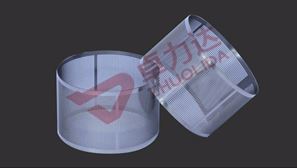
High-quality industrial microchannel plates are mainly produced by photochemical etching micromachining technology, which effectively avoids common defects of traditional mechanical drilling and laser cutting processes. Traditional processing methods often cause uneven aperture size, rough inner walls, structural deformation and residual burrs, which seriously affect signal detection accuracy and fluid operation stability.
Precision etching technology




 189-3869-3452 0513-8160 1666
 E-MAIL:yw5@zldsmt.com
 QQ:$qq
 No. 268, Jinchuan Road, Nantong high tech Industrial Development Zone, Tongzhou District, Nantong City, Jiangsu Province
All Rights Reserved © 2019-2030Nantong Zhuolida metal Technology Co., Ltd.
ICP:【苏ICP备17060045号-3】


 TEL
TEL Products
 News
News About us