
Product
FRIENDLY/link Nantong zhuolida Ali SAMSAN Corrosion machining Nantong zhuolida HJD Shenzhen zhuolida Esprit print
HOTLINE
189-3869-3452 0513-8160 1666


189-3869-3452 0513-8160 1666

Aluminum and aluminum alloy materials are widely used in precision electronics, new energy equipment, automotive parts and industrial hardware manufacturing due to their lightweight characteristics, excellent ductility and high thermal conductivity. However, pure aluminum materials have natural defects such as low surface hardness, poor wear resistance and weak corrosion resistance, which are easily oxidized, scratched and corroded in humid, salt spray and high-temperature working environments. Anodic oxidation of aluminum is a mature and efficient surface strengthening technology that forms a dense, stable and high-hardness oxide film on the aluminum surface through electrochemical reaction. As a professional manufacturer providing high-standard aluminum anodizing service in Nantong, Nantong Zhuolida provides customized anodic oxidation solutions for Yangtze River Delta and global industrial customers, greatly improving the durability, surface finish and environmental adaptability of aluminum parts.
Raw aluminum parts without surface anodizing treatment have obvious performance shortcomings in industrial application scenarios. The natural oxide layer formed on the aluminum surface is extremely thin and uneven, unable to resist external air oxidation, moisture erosion and chemical medium corrosion. In outdoor equipment, automotive accessories and marine environment parts, untreated aluminum materials are prone to surface whitening, oxidation spots and pitting corrosion after long-term use, seriously affecting product appearance and structural stability.
In addition, the original aluminum surface has low hardness and poor scratch resistance. It is easy to produce scratches and deformation during processing, assembly and daily use, reducing the product qualification rate and service life. Ordinary spraying and simple surface coating treatments have weak adhesion, easy peeling and aging problems, and cannot achieve long-term protection. High-quality industrial-grade aluminum surface protection has long relied on sophisticated anodizing technology. Therefore, standardized anodic oxidation of aluminum has become an essential process for high-end aluminum alloy component processing.
Anodic oxidation of aluminum completely differs from traditional surface coating processes. Through professional electrolytic oxidation reaction, a uniform, dense and porous alumina film is formed on the aluminum substrate surface. The oxide film is integrally combined with the aluminum matrix without falling off or peeling off, realizing permanent surface protection. After anodizing, the surface hardness of aluminum parts is greatly improved, with excellent wear resistance and scratch resistance, which can effectively resist daily friction and mechanical damage.
The customized aluminum anodizing process significantly enhances the corrosion resistance and oxidation resistance of aluminum components, adapting to harsh environments such as high humidity, salt spray and alternating high and low temperatures. Meanwhile, the porous oxide film structure supports dyeing, sealing and surface finishing treatments, realizing diversified color customization and high-gloss surface effects. It not only improves the practical performance of aluminum parts, but also optimizes product appearance texture, meeting the dual requirements of industrial functionality and aesthetic design. In addition, the anodized layer has stable insulation performance, which can effectively improve the electrical safety of electronic aluminum accessories.
High-quality anodic oxidation of aluminum requires strict control of pre-treatment, electrolytic parameters, oxidation time and post-sealing processes. Nantong Zhuolida adopts a full-standard anodizing production process, including aluminum surface degreasing, alkali washing, neutralization polishing, high-precision electrolytic oxidation, hole sealing and finished product inspection. All processes are completed in a professional standardized workshop to ensure uniform oxide film thickness, stable color difference and zero surface defects for each batch of products.
We implement strict full-process quality inspection for all custom aluminum anodizing products. Equipped with film thickness detectors, hardness testers, salt spray test chambers and surface flatness testing equipment, we conduct comprehensive detection of oxide film thickness uniformity, surface hardness, corrosion resistance, adhesion and color consistency. We eliminate common industry problems such as uneven oxidation film, color difference, film peeling and surface spots, ensuring that all products meet high-end industrial manufacturing standards and batch stability requirements.
Anodic oxidation of aluminum technology covers almost all industrial fields that use aluminum alloy parts. In the consumer electronics industry, it is widely used for mobile phone shells, notebook accessories and precision structural parts to improve wear resistance and appearance texture. In the new energy and automotive industries, it is applied to automotive aluminum accessories, battery heat dissipation shells and new energy equipment structural parts to enhance corrosion resistance and operational stability.
In addition, precision aluminum anodizing services are also suitable for industrial automation equipment, medical device accessories, aerospace aluminum parts and outdoor hardware facilities. Whether it is functional hard anodizing for mechanical parts or decorative colored anodizing for appearance parts, it can meet customized industrial needs, becoming an indispensable core surface treatment process in modern aluminum alloy processing industry.
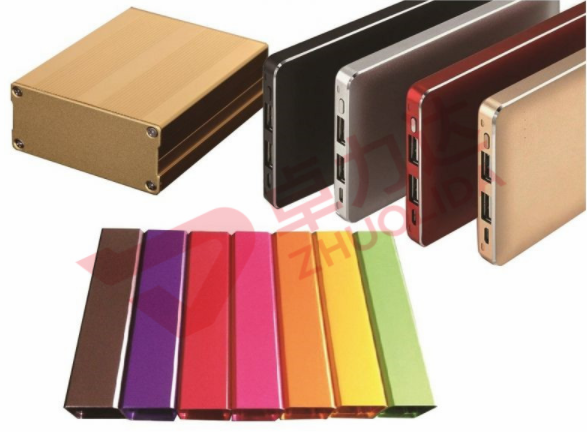
As the core gathering area of precision manufacturing in the Yangtze River Delta, Nantong has complete supporting facilities for metal surface treatment and convenient logistics, closely connecting Shanghai, Suzhou, Wuxi and other high-end manufacturing bases. As a professional local aluminum anodizing manufacturer, Nantong Zhuolida can quickly respond to customer sample processing, small-batch trial production and large-scale mass production needs.
Compared with distant and overseas suppliers, our localized anodic oxidation of aluminum service greatly shortens the delivery cycle, reduces customer processing and logistics costs, and provides one-on-one process customization and technical optimization solutions. We support customized adjustment of oxide film thickness, color classification and hard anodizing parameters according to customer working conditions, helping manufacturing enterprises achieve product upgrading, cost reduction and efficiency improvement.
With the widespread application of aluminum alloy materials in high-end manufacturing, surface treatment quality has become a key factor restricting product performance and service life. Anodic oxidation of aluminum is the most reliable and cost-effective surface strengthening process for aluminum parts. Adhering to standardized processes and strict quality control, Nantong Zhuolida provides global customers with high-stability, high-precision custom aluminum anodizing services, empowering the high-quality development of precision metal processing and industrial supporting industries.

 189-3869-3452 0513-8160 1666
 E-MAIL:yw5@zldsmt.com
 QQ:$qq
 No. 268, Jinchuan Road, Nantong high tech Industrial Development Zone, Tongzhou District, Nantong City, Jiangsu Province
All Rights Reserved © 2019-2030Nantong Zhuolida metal Technology Co., Ltd.
ICP:【苏ICP备17060045号-3】


 TEL
TEL Products
 News
News About us