
Product
FRIENDLY/link Nantong zhuolida Ali SAMSAN Corrosion machining Nantong zhuolida HJD Shenzhen zhuolida Esprit print
HOTLINE
189-3869-3452 0513-8160 1666


189-3869-3452 0513-8160 1666

Chemical etching is a subtractive metal processing technology that uses chemical corrosive solutions to remove unnecessary metal materials and form precise patterns, holes and shapes. Also known as photochemical machining, this non-mechanical processing method is widely used for manufacturing thin metal parts, industrial meshes, precision shims and electronic components. It is a mainstream low and medium-precision metal processing process in the industrial manufacturing field.
The whole process of chemical etching includes photoresist coating, pattern exposure, development, chemical corrosion and post-treatment. The metal surface is covered with protective photosensitive film, and the required graphic area is exposed and cleaned. The exposed metal part is gradually dissolved by etching liquid to form a preset mesh or structural shape. Since no stamping or cutting force is applied, the processed metal plate will not produce mechanical deformation.
Chemical etching technology has obvious cost advantages in conventional precision processing. It is suitable for ultra-thin metal sheet processing with flat and smooth surface without macroscopic burrs. The process supports complex special-shaped structures and arbitrary hole layout designs, with high production repeatability and stable batch consistency. It is an economical choice for medium-precision industrial meshes, shielding parts and filter components.
In high-end precision manufacturing scenarios, chemical etching has inherent technical bottlenecks. The chemical corrosion mechanism inevitably produces tapered hole walls with upper and lower aperture deviation and poor verticality. The corroded inner wall is relatively rough, which easily causes residue accumulation, blocking and poor filtering accuracy. In addition, the metal surface after etching has reduced density, poor wear resistance and weak anti-corrosion performance, not suitable for long-term high-load working conditions.
Different from the subtractive processing ofchemical etching, electroforming is an additive metal deposition technology. Electroformed products are formed by layer-by-layer ion deposition, with completely vertical hole walls, smooth inner walls and zero aperture deviation. The overall structure is dense with zero internal stress, higher hardness and better fatigue resistance. For ultra-high precision mesh, long-life industrial accessories and high-stability electronic parts, electroforming process is far more reliable than chemical etching.
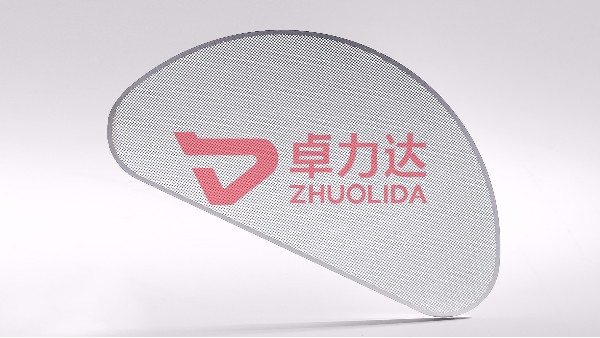
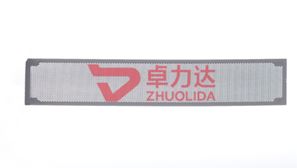
Chemical etching is widely used in general industrial fields with moderate precision requirements. Typical applications include ordinary industrial filter meshes, electromagnetic shielding nets, electronic dust-proof parts, simple printing meshes and low-load conductive pieces. It can meet the basic use demands of conventional equipment and is favored for its low cost and flexible customization.
Zhuolida provides both conventional chemical etching parts and high-end electroforming replacement solutions. For ordinary industrial scenarios, we support cost-effective chemical etching products. For high-precision, long-life and high-stability working conditions, our professional electroformed products perfectly solve the defects of chemical etching such as tapered holes and easy wear. With dust-free workshops and precise testing equipment, we provide global customers with reliable high-precision metal component customization services.

 189-3869-3452 0513-8160 1666
 E-MAIL:yw5@zldsmt.com
 QQ:$qq
 No. 268, Jinchuan Road, Nantong high tech Industrial Development Zone, Tongzhou District, Nantong City, Jiangsu Province
All Rights Reserved © 2019-2030Nantong Zhuolida metal Technology Co., Ltd.
ICP:【苏ICP备17060045号-3】


 TEL
TEL Products
 News
News About us