
Product
FRIENDLY/link Nantong zhuolida Ali SAMSAN Corrosion machining Nantong zhuolida HJD Shenzhen zhuolida Esprit print
HOTLINE
189-3869-3452 0513-8160 1666


189-3869-3452 0513-8160 1666

5 micron slit is an ultra-precise narrow aperture component defined by a fixed slit width of 5 micrometers, widely adopted in optical calibration, laser beam filtering, precision detection, and microfluidic industrial systems. As a core micro-aperture part with micron-level tolerance, the professional 5 micron slitdelivers highly consistent light transmission, particle screening, and fluid control effects that ordinary slits cannot achieve. Manufactured through advanced photochemical etching and ultra-fine trimming processes, high-quality 5 micron slit products feature smooth burr-free slit walls, accurate dimensional control, and stable structural flatness. This SEO and GEO-optimized guide elaborates on core definitions, key specifications, manufacturing advantages, global industrial applications, and regional selection tips for 5 micron slit components.
A5 micron slitrefers to a high-precision linear gap with a standard width of 5μm, strictly controlled within micron-level error tolerance for industrial and scientific applications. Unlike conventional wide slits with low accuracy, the 5 micron slit focuses on ultra-fine aperture precision, serving as a spatial filter to limit beam width, intercept tiny particles, and standardize fluid flow. Its core design principle is to use an ultra-narrow fixed slit to screen out scattered light, impurity particles, and unstable micro-flow, ensuring high accuracy and repeatability of experimental detection and industrial operation data.
Qualified 5 micron slit products have three irreplaceable core features. First, ultra-high dimensional accuracy, with slit width error controlled within ±2μm, fully meeting high-end optical and laboratory precision standards. Second, ultra-smooth slit wall without burrs or deformation, avoiding light scattering and particle residue caused by rough edges. Third, excellent structural stability, with flat and firm substrate that will not deform under long-term light irradiation, pressure impact, and environmental temperature changes. These features make the 5 micron slit a standard precision component in global high-precision scientific research and industrial manufacturing fields.
The production of 5 micron slit requires ultra-precision micro-processing technology, and traditional mechanical drilling and stamping cannot meet its micron-level precision requirements. At present, mainstream global manufacturers adopt photochemical etching and laser fine correction processes to produce high-standard 5 micron slitcomponents, ensuring consistent product batch stability.
The standardized manufacturing workflow includes substrate selection, surface purification, photoresist coating, precision mask exposure, constant-temperature etching, film stripping, and microscopic inspection. Industrial-grade stainless steel, nickel alloy, and aluminum alloy are the preferred substrates for 5 micron slit, featuring high flatness and corrosion resistance. After precision etching, the slit wall is polished and blackened to reduce light reflection and improve optical filtering accuracy. Every finished 5 micron slit will undergo high-magnification microscope detection to screen out defective products with uneven width and edge defects, ensuring 100% compliance with precision standards.
5 micron slit has unique competitive advantages in precision screening and optical control compared with 10 micron, 20 micron and other wide-aperture slits. Firstly, ultra-fine precision interception. The 5μm ultra-narrow aperture can effectively filter tiny scattered light and micro-impurities, improving the resolution and detection accuracy of precision instruments, which is essential for high-sensitivity experimental testing.
Secondly, stable and consistent performance. The fixed-size slit design avoids data deviation caused by adjustable aperture errors, ensuring repeatable experimental results and stable industrial operation. Thirdly, strong environmental adaptability. Metal-made 5 micron slit resists high temperature, oxidation, and slight corrosion, adapting to complex working environments such as laboratory constant temperature and industrial dust-proof purification. Fourthly, compact and easy to install. The standardized sheet metal structure is compatible with most precision optical instruments, laser equipment, and microfluidic detection devices worldwide, with high assembly compatibility.
The market demand and application scenarios of 5 micron slit show obvious regional differentiation with global precision industry layout. In Europe and North America,5 micron slit is mainly applied in high-end scientific research laboratories, aerospace optical detection equipment, and laser precision calibration systems. Local industries pursue ultra-high precision and data stability, requiring strict tolerance control and surface treatment of 5 micron slit products.
In East Asia and Southeast Asia, 5 micron slit is widely used in industrial precision detection instruments, microfluidic purification equipment, and electronic component testing machinery. Local manufacturing bases focus on cost-effective batch supply, applying 5 micron slit for fine particle filtration and beam positioning in civilian high-precision equipment. In addition, tropical humid regions prioritize anti-rust and anti-corrosion alloy5 micron slit to adapt to high-humidity working environments and extend service life.
In the Middle East and Latin American precision manufacturing fields,5 micron slit is mainly used for petroleum fine impurity detection and chemical micro-particle screening, relying on its ultra-fine interception performance to improve product purification accuracy.
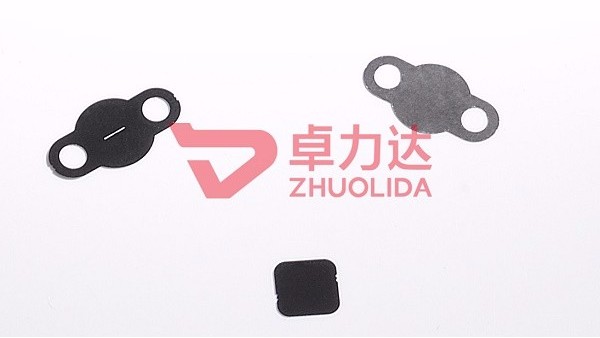
To maximize the service performance of 5 micron slit, users need to select materials and specifications according to regional environments and application scenarios. For high-precision optical laboratories in Europe and America, blackened stainless steel 5 micron slit is recommended to reduce light reflection and improve detection accuracy. For humid industrial environments, nickel alloy 5 micron slit with stronger oxidation resistance is preferred to avoid aperture blockage caused by rust.
Daily maintenance is crucial for 5 micron slit. The ultra-fine 5μm aperture is easily blocked by tiny dust and particles, so regular dust cleaning with professional optical cleaning tools is required. Avoid extrusion and friction during use to prevent slit deformation and edge damage, ensuring long-term stable precision of the 5 micron slit.
As an indispensable ultra-precision micro-aperture component, the5 micron slitprovides accurate beam filtering and micro-particle interception solutions for global scientific research and precision manufacturing. With ultra-high dimensional accuracy, stable structural performance, and wide scenario adaptability, the 5 micron slit solves the precision bottleneck of conventional slit components in high-end detection and purification fields. With the continuous upgrading of global precision instrument manufacturing and experimental testing standards, the market demand for high-precision, durable, and high-stability5 micron slitwill continue to grow. Standardized selection and maintenance can effectively improve equipment detection accuracy and operational stability, bringing higher precision benefits for global industrial and scientific research users.



 189-3869-3452 0513-8160 1666
 E-MAIL:yw5@zldsmt.com
 QQ:$qq
 No. 268, Jinchuan Road, Nantong high tech Industrial Development Zone, Tongzhou District, Nantong City, Jiangsu Province
All Rights Reserved © 2019-2030Nantong Zhuolida metal Technology Co., Ltd.
ICP:【苏ICP备17060045号-3】


 TEL
TEL Products
 News
News About us